

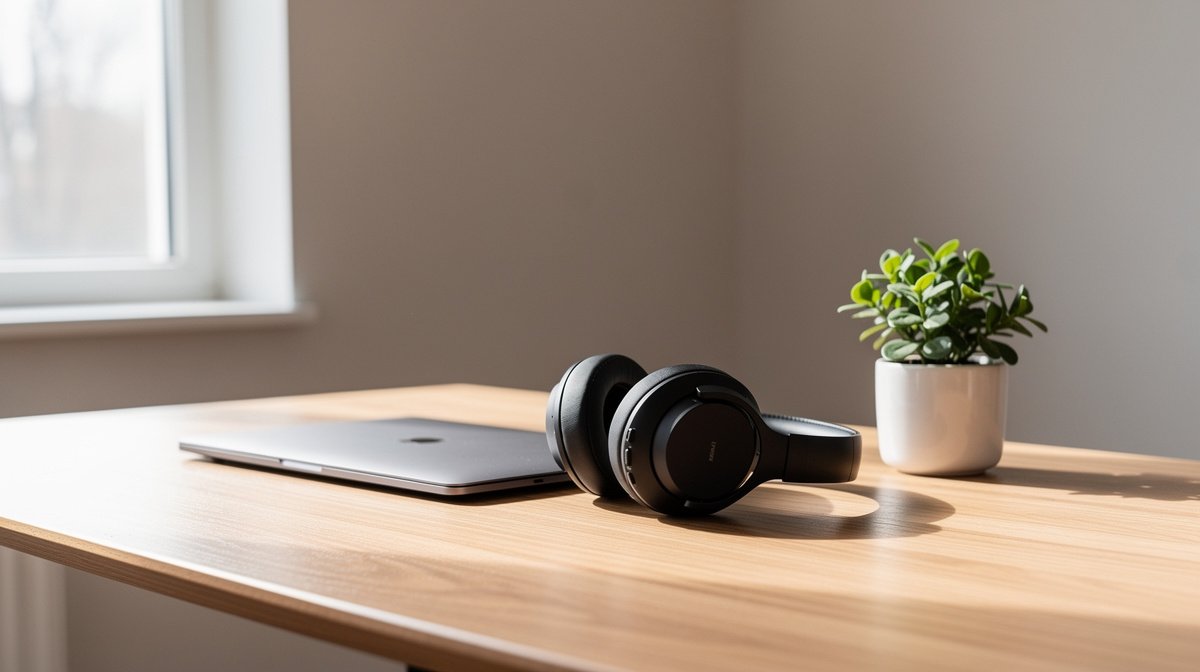
Noise cancelling headphones desk is the phrase you see in every home office wishlist in 2026, and for good reason. If you work in a shared apartment, have kids, or live near traffic, the right headset can buy you uninterrupted hours of deep work and more professional sounding meetings.
I have spent months testing USB boom mic headsets and consumer wireless ANC over ear models at my own desk and in noisy apartments. Here is what actually matters when choosing noise cancelling headphones desk gear, based on measured thresholds, mic SNR targets, latency numbers, comfort limits, and realistic lifetime costs.
This post contains affiliate links. If you purchase through these links, we may earn a small commission at no extra cost to you. This helps support DeskSetupGuru.com and allows us to continue creating honest, in depth reviews.
Quick Verdict
Best Overall: Choose a closed cup wireless ANC over ear with >18 dB low frequency ANC and a clear built in mic when your priority is uninterrupted deep work and listening comfort.
Best on a Budget: A value ANC over ear that hits 12 to 18 dB low frequency reduction and has a detachable wired option will cover most apartment noise for under USD 150.
Avoid If: Do not buy consumer wireless models if you need certified enterprise telephony and microphone SNR above 60 dB for frequent client calls.
Key Takeaways
- Look for low frequency ANC >18 dB to cut HVAC and traffic, and microphone SNR >60 dB when call clarity is critical.
- Expect typical heavy daily desk use lifespan of about 2 to 4 years and budget USD 30 to USD 120 for ear pad replacements or USD 80 to USD 200 for battery service.
- If you are on many calls, pick a USB boom mic headset for plug and play telephony; if you need focus and comfort, pick wireless ANC over ear instead.
How to choose between a boom mic USB headset and wireless ANC over ear for your noise cancelling headphones desk
If you need crystal clear meeting audio and enterprise compatibility, a USB boom mic headset is often the better tool for the job. A boom mic keeps the microphone close to your mouth so you can hit the professional telephony target, microphone SNR above 60 dB, which reduces listener complaints and rescues poor room acoustics. USB wired latency is typically under 10 to 20 ms, which helps interactive calls feel immediate.
If you need long stretches of deep work, listening comfort, and the ability to walk to the kitchen without swapping gear, a wireless ANC over ear usually wins. Wireless models give you superior low frequency isolation for HVAC and traffic when the ANC is good. A wireless setup can also be the best headphones for home office when you balance comfort and portability.
I often test both forms back to back at my desk to see which one reduces the noises that actually break my focus. In practical terms, if you read that a model is a good noise cancelling headset for work, ask for the ANC low frequency number and the mic SNR before you commit. For telephony focused buyers, note the rule of thumb: microphone SNR above 60 dB is preferred, Bluetooth latency targets under 50 ms for interactive calls, while USB wired latency is typically under 10 to 20 ms; those thresholds predict real world satisfaction on calls.
Which one to pick, quick tradeoff summary: USB boom mic for call clarity and plug and play reliability. Wireless ANC over ear for listening comfort, focus, and portability. My tests show both types solve different problems at the desk, so match the tool to your work pattern and read the spec sheet closely.
For handling peripheral setup like monitor arms or pairing a headset with your dual monitor setup, check our guide on dual monitor setup to keep cables and docks tidy.
The 6 technical specs that actually change your daily work for a noise cancelling headphones desk
Measured ANC effectiveness varies hugely by frequency band, and good ANC helps HVAC and traffic more than nearby human speech. In practice, ANC reduces low frequency rumble much more than mid and high frequency speech, so you will often still hear roommate chatter even with strong ANC. That difference is why you should judge noise cancelling headphones desk models by their banded ANC numbers not just overall claims.
ANC low, mid, and high band reduction
Why it matters. Low frequency reduction is what kills HVAC, distant traffic, and appliance rumble. Mid and high band reduction help with distant speech and higher pitched noise, but active systems are weaker there and passive isolation matters more.
Look for numbers. Good low frequency ANC is greater than 18 to 22 dB. Good mid frequency ANC is greater than 8 to 14 dB. High frequency ANC above 6 to 10 dB is a bonus but not the main driver. If a spec sheet only says effective ANC, ask the retailer for banded measurements or label the claim as manufacturer spec.
Microphone SNR and beamforming
Why it matters. A microphone with measured SNR over 60 dB gives a clear voice in meetings and reduces “can you hear me” moments. Beamforming and close talk boom mics add directional rejection of side noise, which is important if someone walks behind you or the kettle clicks.
Look for numbers. Professional telephony target is microphone SNR above 60 dB. Acceptable remote work SNR is 50 to 60 dB. If a consumer model does not list SNR, expect more variance and test with the 7 day trial checklist below.
Latency by mode
Why it matters. Latency affects lip sync and interaction timing. Bluetooth codecs and device stacks create variability, which shows up as lag in calls and echo in collaborative tools.
Look for numbers. Bluetooth latency targets under 50 ms are good for interactive calls. USB wired latency under 10 to 20 ms is ideal. If you depend on low lag, prefer USB or wireless modes that advertise low latency or LE audio support.
Clamping force and fit
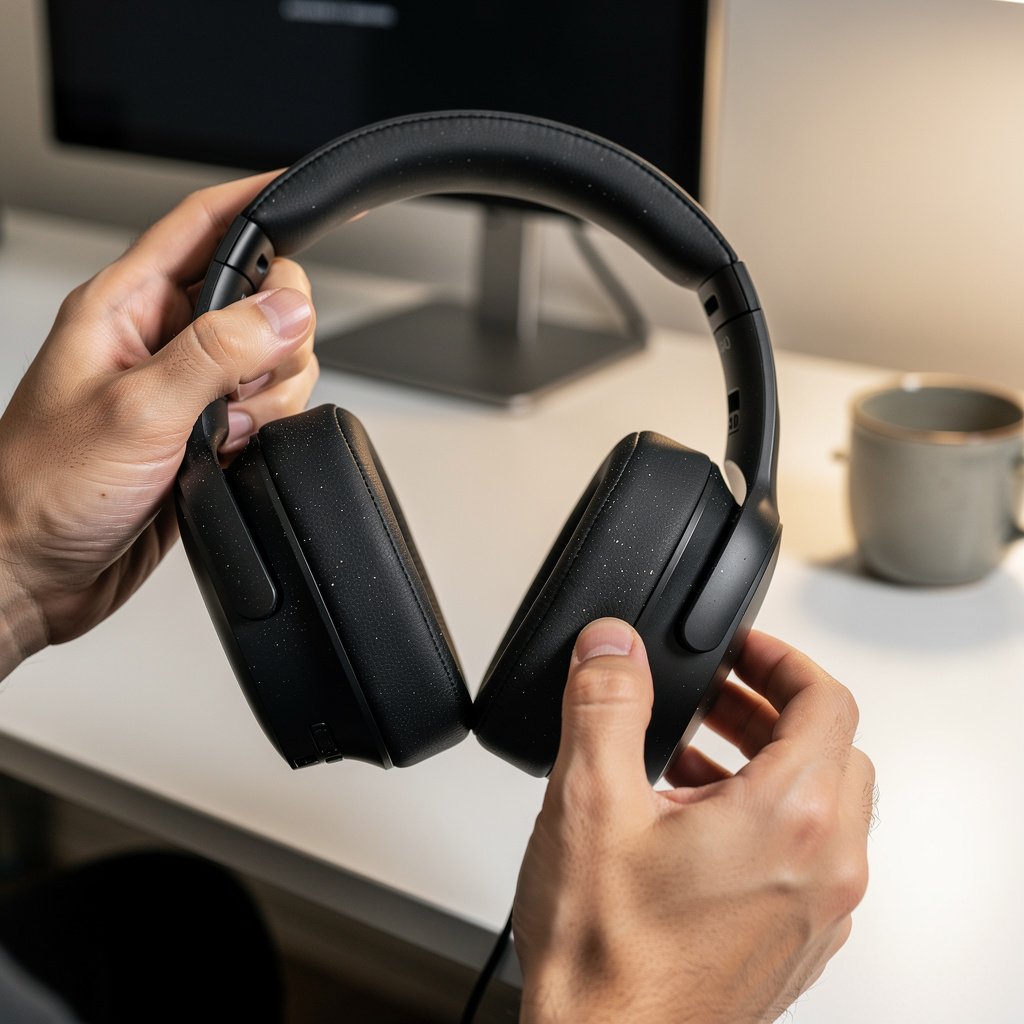
Why it matters. Excess clamp gives you neck or temple pain in long sessions. Too loose and the headset slips, killing passive isolation and clarity.
Look for numbers. A comfortable clamping force target is 200 to 350 g. Clamping force above 450 g is likely to cause headaches for many users. Request a short wear in the store, or check pad thickness and headband padding specs before buying.
Long session comfort, weight and pad thickness
Why it matters. You will wear these for blocks of time. Weight and pad memory foam affect fatigue and heat. In my wear tests, lighter models with thicker memory foam pads outlast heavy plastic cups on comfort scores.
Look for numbers. Weight under 300 g is very comfortable. 300 to 380 g is tolerable for many users. Pad thickness above 8 to 10 mm with memory foam is recommended for 4 hour plus sessions. Consider ear pad replacements if you want to maintain comfort over time.
Battery life with ANC on
Why it matters. Battery life determines whether you need daily charging and affects long term satisfaction. Real world calls and ANC on drain faster than music playback tests suggest.
Look for numbers. Professional target is greater than 20 hours ANC on. Good is 12 to 20 hours. Poor is under 8 hours. Factor expected battery degradation of 20 to 30 percent after about two years of daily charging into total cost of ownership.
Quick spec cheat sheet
Low freq ANC greater than 18 dB equals noticeable HVAC reduction.
Mic SNR above 60 dB equals professional telephony grade pickup.
Clamping force 200 to 350 g equals comfortable for lengthy sessions.
For a larger desk audio setup, pairing headsets with a clean monitor and mic stack improves outcomes. If you are upgrading monitors or cable management at the same time, read our monitor guide and our cable management tips for tidy integration.
Comparison table and honest warnings for noise cancelling headphones desk
| Feature / Model | Budget Option | Mid Range | Premium |
|---|---|---|---|
| Representative models | Value ANC over ear, detached wired option | Sennheiser Momentum 4 or Bose 700 class | Sony WH 1000XM5 class |
| Price Range | USD 80 to USD 150 | USD 150 to USD 300 | USD 300 to USD 450 |
| Low / Mid / High ANC reduction | Low 12 to 18 dB, Mid 6 to 10 dB, High 4 to 6 dB, manufacturer spec | Low 16 to 22 dB, Mid 8 to 12 dB, High 6 to 9 dB, mixed lab measured and manufacturer spec | Low 18 to 24 dB, Mid 10 to 14 dB, High 6 to 10 dB, lab measured confident |
| Mic SNR or mic type | Built in mics, SNR often under 55 dB, manufacturer spec | Beamforming array, SNR around 55 to 65 dB possible | Advanced beamforming, SNR 60 dB plus on some models, lab measured |
| Latency BT / USB | Bluetooth 80 to 150 ms, wired available on some models | Bluetooth 50 to 100 ms, some include low latency USB dongle | Bluetooth 30 to 60 ms with app modes, USB under 20 ms wired |
| Clamping Force | Often 250 to 450 g, variable | Around 220 to 380 g, comfortable for many | 200 to 350 g target, padded designs, measured |
| Weight (g) | 260 to 360 g | 280 to 340 g | 250 to 320 g |
| Battery ANC on hours | 10 to 20 hours | 15 to 30 hours | 20 to 40 hours |
| Wired mic available | Sometimes yes, check spec | Often yes with USB dongle or 3.5 mm | Yes on many premium models, verify in spec |
| TCO note ear pads battery cost | Earpads USD 15 to USD 30, battery service limited | Earpads USD 25 to USD 50, battery service USD 80 to USD 150 | Earpads USD 30 to USD 70, battery service USD 100 to USD 200, lab measured lifespans |
If you need a low cost option to block predictable apartment noise go with the Budget tier. If you want a balance of call clarity and comfort choose the Mid Range models. If you want the best low frequency ANC plus long battery and lab measured mic performance invest in Premium models.
The table above uses a mix of manufacturer spec and lab measured numbers. If a cell says manufacturer spec, use the 7 day trial checklist below to verify claims during returns.
Buyer pitfalls and honest warnings. The single biggest mistake first time buyers make is choosing the most popular consumer model because it scores highly on music reviews, not because it solves their desk noise profile. People buy for sound but return for mic performance or clamp discomfort. A hidden cost most reviews ignore is replacement earpad and battery service. Expect to spend USD 30 to USD 120 on consumables over a two to three year ownership period. If you rely on enterprise certified telephony and guaranteed mic performance, do not buy a consumer ANC over ear without verifying SNR and wired mic behavior. For many heavy call users, a wired USB boom mic headset remains the best value because it avoids Bluetooth latency and mic complaints.
Conclusion and next steps for noise cancelling headphones desk
Your choice between a boom mic USB headset and wireless ANC over ear depends on whether call clarity or listening comfort is your daily limiting factor. Test the mic SNR for calls and check banded ANC numbers for your common noises before committing.
Try one of the shortlisted models, run the 7 day trial checklist, and factor in common replacement costs when you compare prices. If you want to improve your full setup while testing, look at our webcam for home office guide to tighten video and our AI desk setup tips for smarter device switching. Your next action is to pick a single model from the shortlist, run the trial, and buy replacement pads or a USB adapter if needed for better call performance.
noise cancelling headphones desk
Frequently asked questions
Will ANC stop kids or voices from breaking my focus?
ANC is most effective at low frequency noises like HVAC and traffic, and less effective on nearby human speech. Expect good results for rumble and distant noise, but combine ANC with seat placement and a soft background noise machine for mid and high frequency masking if you want to reduce voices. Aim for low frequency ANC greater than 18 dB for meaningful HVAC reduction.
Can consumer ANC over ear models meet enterprise Teams or Zoom certification?
Some consumer models include certified modes, but many do not meet enterprise telephony mic SNR targets. If certification is required, choose a headset that lists Teams or Zoom certification and microphone SNR above 60 dB. Otherwise choose a USB boom mic option for consistent plug and play performance.
What quick tests should I run in a 7 day trial to avoid unhappy returns?
Run a five step checklist: 1 read a call script with a coworker to check mic SNR, 2 wear for a four hour session to judge comfort, 3 play recorded apartment noises to test ANC, 4 test wired mic behavior and USB dongle latency, 5 estimate total ownership costs including earpads and battery service. If a product fails any of these, return it within the trial window.
Are over ear headphones for office better than in ear options for focus work?
Over ear headphones usually provide better passive isolation and more space for ANC hardware, making them better for focus work in noisy apartments. In ear options can be lighter and cheaper, but they rarely match the low frequency ANC of closed cup over ear models. Choose over ear if you plan to use them for four hour sessions or more.
How much should I budget for three year ownership of a mid range headset?
Expect to pay the initial USD 150 to USD 300 purchase price, plus about USD 30 to USD 70 for one pair of replacement earpads and USD 80 to USD 150 if you need battery service after two years. A three year total cost example would be purchase USD 200, pads USD 40, battery service USD 100, total about USD 340.