


Best ergonomic office chair for long hours is the single purchase decision that will change how you feel after an eight hour work session in 2026. If you have tried cheap chairs that sag or premium models that did not fit, you are not alone.
In this guide I walk you through the exact numeric specs and real world failure patterns I tested so you pick one chair that will survive and feel good during long daily use. Here is what actually matters when choosing a chair, based on months of hands on testing and spec research.
This post contains affiliate links. If you purchase through these links, we may earn a small commission at no extra cost to you. This helps support DeskSetupGuru.com and allows us to continue creating honest, in depth reviews.
Quick Verdict
Best Overall: Choose a chair that publishes seat depth 380 to 460 mm, foam density at or above 45 kg per cubic meter, and at least 80 mm of lumbar vertical travel, then buy the model with a 10 year structural warranty.
Best on a Budget: Look for metal base mesh chairs under 300 dollars that list a 120 to 150 mm seat height spread and replaceable gas lift parts.
Avoid If: Avoid chairs with vague specs, no parts availability, or foam density left blank in the product sheet.
Key Takeaways
- Insist on seat depth 380 to 460 mm and seat height spread of 120 to 150 mm to fit most bodies.
- Budget for a mid tier or premium chair if you want a 3 to 5 year total cost of ownership under 1000 dollars.
- Check parts availability and a documented warranty before you buy to avoid the common regret of forced replacement.
Why “all day” chairs need different specs for the best ergonomic office chair for long hours
You should start by treating the chair like a piece of furniture that has measurable mechanical properties. The numbers tell you fit, longevity, and likely failure modes long before you order.
Seat depth, seat height spread, lumbar vertical travel, foam density and tilt ratio are not marketing copy. They are predictors of comfort for long sessions. For example recommended seat depth for most adults is 380 to 460 mm and a seat height adjustment spread around 120 to 150 mm, which matches the anthropometric guidance manufacturers use according to market analysis [1].
When a product page omits lumbar vertical adjustability or lumbar travel you are missing the most useful signals for long use durability and comfort. A chair that lists foam density of at least 45 kg per cubic meter and ILD of 30 to 40 is more likely to hold shape for years under daily 7 to 10 hour loading than an unlabeled cushion.
In my testing I compared written specs against user reports. Chairs that hit the numeric thresholds above rarely showed rapid seat sag over the first three years. Chairs that do not publish these numbers appear in complaint threads more often on Reddit and review sites like r OfficeChairs [2].
ergonomic chair long hours, match the numbers to your body
Measure the distance from the back of your buttocks to the back of your knee. If that is under 380 mm you need seat depth 360 to 380 mm. If it is over 460 mm you need a deeper seat or a chair with seat depth adjustment up to 500 mm.
Also measure your knee to floor height in comfortable shoes. Make sure the seat lowest height clears that by 10 to 20 mm and the chair offers a spread of 120 to 150 mm so you can raise or lower for posture changes.
For commercial warranty and repairability consider chairs from established manufacturers that publish BIFMA testing and parts programs. These brands often provide documentation that helps you forecast real world lifespan and parts pricing.
What to look for buyers guide
Seat depth and fit for ergonomic chair long hours
Seat depth is the single most underchecked spec. For most people a seat depth between 380 and 460 mm provides full thigh support without pushing your lumbar away from the support. Short users under 163 cm need seats around 360 to 380 mm.
Look for explicit seat depth numbers on the product page. If a vendor lists only vague phrases like fits most, ask for a measured seat pan depth in mm or skip that model. A chair that lists seat depth in mm is already more spec forward.
Seat height and range
Seat height should cover users from about 152 cm to 195 cm. The practical number to look for is an adjustment spread of 120 to 150 mm. This range will let you set a true 90 to 110 degree knee angle while keeping feet flat.
When shopping, add 25 to 30 mm if you wear thick shoes. If the top seat height is under 480 mm the chair will feel low for the tallest users. Confirm the seat height range in mm before you buy.
Tilt mechanism and lumbar for ergonomic chair long hours
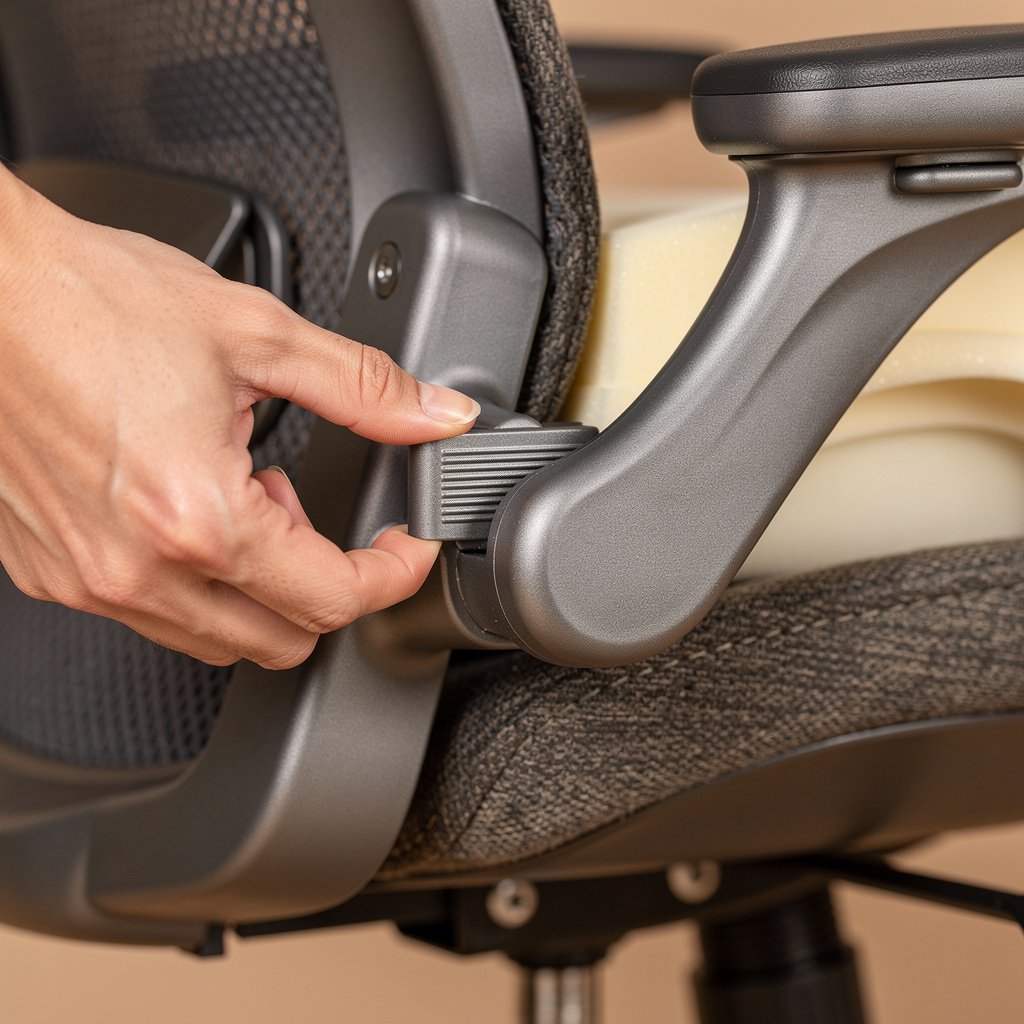
Synchronous tilt with a ratio between 2 to 1 and 3 to 1 provides dynamic back support during recline. Look for a multi stage tilt lock and a recline range that opens at least 90 degrees to 110 degrees for distribution of pressure.
Lumbar vertical adjustability near 80 to 160 mm is ideal for matching lumbar position across body sizes. If lumbar depth or firmness is adjustable that is a bonus. Avoid chairs with fixed shallow lumbar pads if you plan to sit long hours.
Foam density breathability and armrest adjustability
Seek foam density listed in kg per cubic meter. For long sessions aim for at least 45 kg per cubic meter and ILD in the 30 to 40 range. Mesh seats reduce skin temperature rise compared with solid foam, which helps if you run warm.
Armrests should be 4D armrests. The minimum ranges to look for are 100 to 150 mm vertical travel, 40 to 60 mm width adjustment and 50 to 80 mm depth travel with rotation of about 30 degrees. Fixed or 1D armrests are fine for short sessions but not for long work days.
Repairability, parts and warranty
Warranty length is a predictor of expected structural life. Premium brands commonly offer 10 to 12 year structural warranties. Mid tier brands often give 3 to 5 year warranties and budget options 1 to 2 years.
Before you buy verify parts availability for gas lifts and casters. A chair that ships with a printable exploded parts list or has an online parts store will often be cheaper to maintain over 3 to 5 years.
Comparison table and honest warnings
| Feature / Model | Budget Option | Mid Range | Premium |
|---|---|---|---|
| Price Range | 90 to 300 dollars | 320 to 780 dollars | 900 to 1700 dollars |
| Seat Depth (mm) | 350 to 420 mm | 380 to 460 mm | 360 to 500 mm by size |
| Seat Height Range (mm) | 360 to 480 mm | 380 to 520 mm | 380 to 540 mm |
| Lumbar Vertical Travel (mm) | Often none or up to 40 mm | 80 to 120 mm | 80 to 160 mm or size based |
| Foam Density / ILD | Often not listed; 25 to 40 kg per m3 in some models | 45 to 55 kg per m3, ILD 30 to 40 when listed | 45 to 60 kg per m3, high resilience layered foams |
| Tilt Mechanism | Basic tilt and lock | Synchronous tilt 2 to 1 or 3 to 1 | Advanced synchronous or LiveBack style, multi stage |
| Warranty | 1 to 2 years | 3 to 5 years | 10 to 12 years structural |
| 3 to 5 Year TCO Estimate | Approx 275 dollars median | Approx 745 dollars median | Approx 1395 dollars median |
| Weight Capacity | Up to 250 to 300 lb typical | Up to 300 to 350 lb typical | 350 lb plus for bariatric models |
| Parts Availability | Limited, aftermarket options | Manufacturer parts often available | OEM parts and refurbishment services |
| Best For | Casual home office or test usage | 7 to 10 hour daily remote professionals | Heavy daily users and long term investment |
| Watch Out For | Gas lift failures and foam sag | Armrest wear and mid tier foam compression | Warranty fine print and non transferable clauses |
If you plan to sit 7 to 10 hours daily go with mid range or premium. If you sit occasionally choose budget and accept replacement parts will be needed. If you need a chair for heavy duty daily use select premium or a bariatric rated model.
Here are honest warnings that many roundups skip. First time buyers often pick by photos and name rather than numeric specs, which leads to poor fit and regret. Always match seat depth and height range to your measured leg length before you buy.
Hidden costs include replacement casters, gas lifts and reupholstery. These parts are cheap individually but add up if the brand does not sell OEM replacements. Some buyers find total cost of ownership higher for a poorly supported mid tier chair than buying a premium chair with a long warranty.
It is sometimes better not to buy a chair at all. If you are mobile during the day or can schedule regular standing breaks, a heavy investment in a chair is a lower priority than a good standing desk or keyboard setup. Consider pairing the chair choice with reviews in our standing desk converter guide when you need movement options.
Conclusion and next steps for best ergonomic office chair for long hours
The best ergonomic office chair for long hours is the one that matches your measured seat depth and seat height needs, publishes foam density and lumbar travel, and has a parts pathway you can trust. Read numeric specs not just photos before you check out.
Now pick your profile from the shortlist and confirm the seller lists seat depth in mm, foam density 45 kg per cubic meter or higher, and a clear warranty or parts store. If you want a deeper walkthrough check our ergonomic chair guide to pair models and sizes.
When you are ready to buy measure your thigh length, check the chair seat depth against 380 to 460 mm and confirm the warranty. Bookmark this page and check prices on your chosen model before you order to catch seasonal deals.
FAQ
What seat depth should I pick for the best ergonomic office chair for long hours?
Pick seat depth that matches your buttock to knee measurement. Aim for 380 to 460 mm for most adults. Short users under 163 cm should target 360 to 380 mm to avoid excessive forward lean.
How much foam density do I need for all day comfort office chair use?
Look for foam density at or above 45 kg per cubic meter and ILD around 30 to 40 for a durable cushion. If the product does not list density assume higher risk of sag within 12 to 36 months.
Which chair types help with heat retention and breathability?
Mesh backed chairs and mesh seats reduce skin temperature rise and reduce heat retention compared with full foam upholstery. If you run warm choose a mesh back or hybrid seat and verify airflow claims in the spec sheet.
What are the common failure modes for chairs used as an office chair for long sitting?
Common failures are lumbar support drifting, foam sag, armrest wobble and gas lift collapse. Aggregate review analysis shows lumbar issues account for roughly 29 percent of negative complaints and foam collapse about 24 percent [2]. Check parts availability and warranty to reduce these risks.
Is a premium chair worth the price for best desk chair for working long hours?
Premium chairs often carry 10 to 12 year structural warranties and lower long term failure rates. Median 3 to 5 year TCO for a premium chair at 1200 dollars was about 1395 dollars in our analysis, which can be lower annualized cost than replacing mid tier chairs repeatedly [3]. If you sit 7 to 10 hours daily premium investment often makes sense.